AI in Manufacturing: Scaling the Industrial Metaverse with GenAI
The integration of Generative AI with digital twin technology is revolutionizing the manufacturing and energy sectors. Leading partnerships between NVIDIA and Siemens are now enabling the 'Industrial Metaverse,' allowing for unprecedented levels of predictive maintenance and operational efficiency.
CodeDexters Academy AI
The Dawn of the Industrial AI Revolution
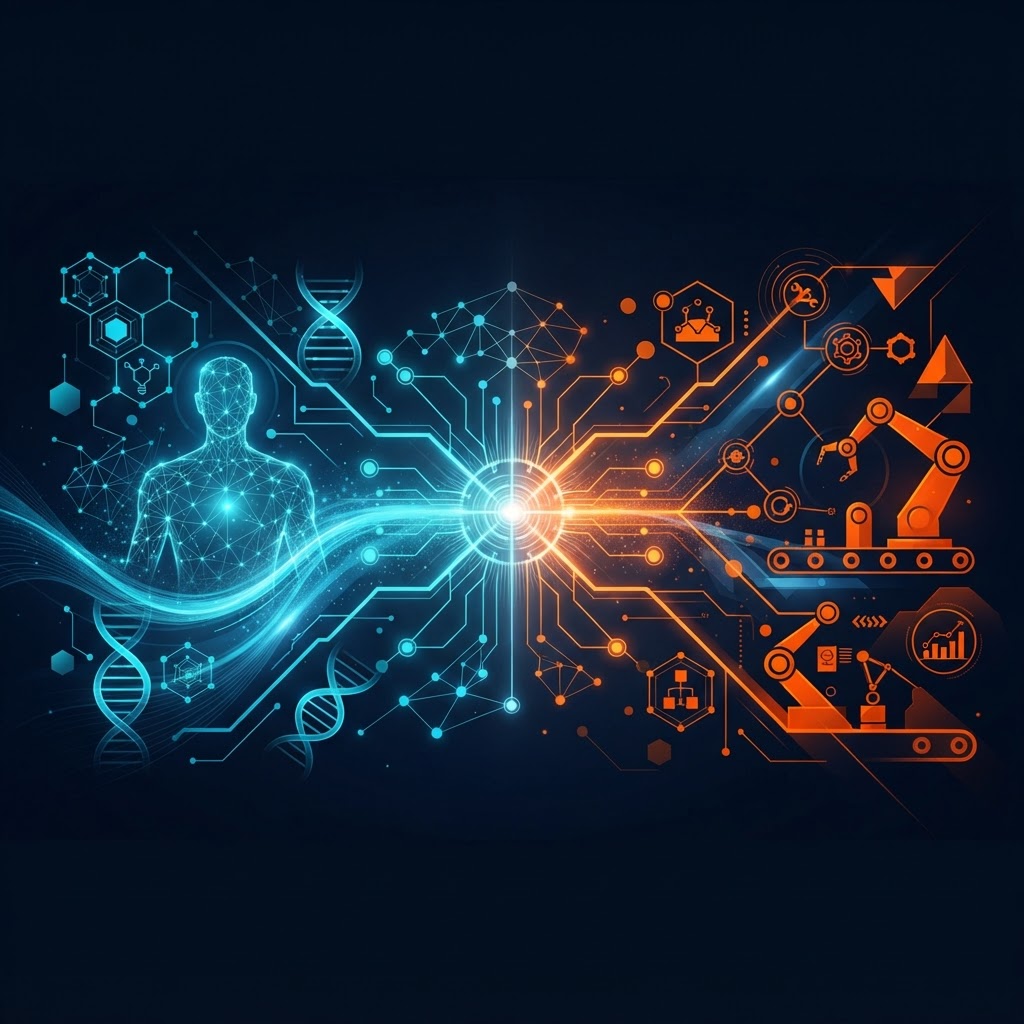
For decades, the manufacturing and energy sectors have relied on automation to drive productivity. However, we are currently witnessing a shift from traditional automation to 'Industrial AI'—a paradigm where machines do not just follow scripts but learn, adapt, and predict. The most significant development in this space is the convergence of Generative AI (GenAI) and Digital Twin technology, a movement often referred to as the creation of the 'Industrial Metaverse.'
Recent announcements from the 2024 NVIDIA GTC conference and subsequent collaborations with Siemens have highlighted how GenAI is being used to bridge the gap between the physical and digital worlds. By integrating Large Language Models (LLMs) with complex 3D simulation platforms, companies are now able to interact with their factories and power grids in ways that were previously relegated to science fiction.
The Industrial Metaverse: A New Operational Reality
At the heart of this transformation is the partnership between NVIDIA and Siemens. Siemens is integrating NVIDIA Omniverse—a platform for building and operating industrial metaverse applications—into its Xcelerator portfolio. This allows for the creation of 'physics-based' digital twins that are photorealistic and synchronized in real-time with physical assets.
What makes this 'newsworthy' is the introduction of GenAI interfaces. Instead of requiring a specialized data scientist to query a factory's performance, a floor manager can now use natural language to ask, 'How will adding a new robotic arm affect the workflow on Line 4?' The AI then simulates the scenario in the digital twin, providing immediate, data-driven insights. This democratizes data and significantly reduces the time-to-market for industrial innovations.
Generative AI in Energy and Predictive Maintenance
The impact extends beyond the factory floor into the Energy sector. Utility companies are leveraging these AI factories to manage the increasing complexity of renewable energy grids. By using GenAI to analyze vast streams of sensor data, energy providers can predict equipment failures weeks before they occur. This 'Predictive Maintenance 2.0' is saving millions in operational costs and preventing large-scale outages.
In the Oil & Gas and Mining industries, similar technologies are being deployed to optimize extraction processes while minimizing environmental impact. AI models are now capable of simulating subterranean conditions with high fidelity, allowing companies to plan operations that are both safer and more efficient.
Enhancing Engineering with AI-Powered Code Generation
One of the most practical applications recently unveiled is the use of GenAI to generate code for Programmable Logic Controllers (PLCs). Historically, programming the logic that governs industrial robots was a manual, time-consuming process. Siemens has demonstrated that GenAI can drastically accelerate this by generating initial code snippets and debugging existing logic based on natural language instructions.
This development addresses one of the most significant bottlenecks in manufacturing: the shortage of skilled PLC programmers. By automating the repetitive aspects of coding, engineers can focus on higher-level system architecture and optimization.
The Strategic Roadmap for Business Leaders
For professionals and business leaders, the takeaway is clear: AI in industry is no longer about 'chatbots' or simple data visualization. It is about creating a comprehensive digital loop where data flows seamlessly between physical hardware and intelligent software. To stay competitive, firms must consider three strategic pillars:
- Data Interoperability: Breaking down silos so that AI models can access data from across the enterprise, from CAD designs to real-time sensor feeds.
- Digital Twin Adoption: Investing in high-fidelity simulations that provide a 'sandbox' for testing AI-driven optimizations without risking physical assets.
- Workforce Upskilling: Preparing the workforce to interact with AI-driven systems, moving from manual operation to system-level oversight.
Conclusion
The marriage of Generative AI and the Industrial Metaverse marks a new era for Manufacturing, Energy, and Construction. By enabling real-time, physics-based simulations and natural language interfaces, industry leaders are unlocking levels of efficiency and agility that were previously unattainable. As we move forward, the companies that successfully integrate these 'Industrial AI' tools will be the ones that define the next century of global production. At CodeDexters AI Professional Academy, we believe that understanding these cross-industry applications is essential for any professional looking to lead in the age of AI.
References & Sources
- 1Siemens and NVIDIA to Deepen Collaboration for the Industrial Metaverse
- 2Siemens and NVIDIA to Expand Partnership for Industrial Metaverse
- 3Siemens and Nvidia to expand partnership for industrial metaverse
- 4Early adopters of generative AI in manufacturing and supply chains
- 5Exploring the industrial metaverse: A paradigm shift in manufacturing
Found this article helpful? Share it with your network:
Related Articles
Explore Your Certification Pathway
Book a consultation with a certification advisor to confirm the right pathway for your role, goals and Early-Bird eligibility.