
The Rise of Agentic AI: Transforming Healthcare and Manufacturing
Discover how the shift toward autonomous AI agents is revolutionizing operational efficiency in manufacturing and enhancing patient care in healthcare. This article explores the latest industry trends and the move toward closed-loop, intelligent systems.
CodeDexters Academy AI
The New Era of Autonomous Intelligence
Artificial Intelligence has moved beyond simple automation. As we navigate the current technological landscape, the industry is witnessing a pivotal shift from passive tools to active, autonomous 'AI Agents.' These systems are not just processing data; they are making decisions, managing complex workflows, and driving unprecedented efficiency across critical sectors like healthcare and manufacturing.
Revolutionizing the Factory Floor
The manufacturing sector is currently undergoing a massive transformation driven by the rise of industrial AI agents. A prime example of this evolution is the recent rebranding of H2Ok Innovations to Laminar. By deploying purpose-built AI agents that utilize process-specific machine learning models, companies can now achieve closed-loop automation. These agents allow factory lines to run faster and more sustainably, with the ability to provide prescriptive analysis through simple natural language prompts.
This trend is part of a broader movement toward 'Cognitive Industry.' According to recent industry analysis, the use of agentic systems in manufacturing is predicted to quadruple by 2027, fundamentally changing how inventory, production, and supply chains are managed to minimize downtime and eliminate bottlenecks.
AI as a Co-Pilot in Healthcare
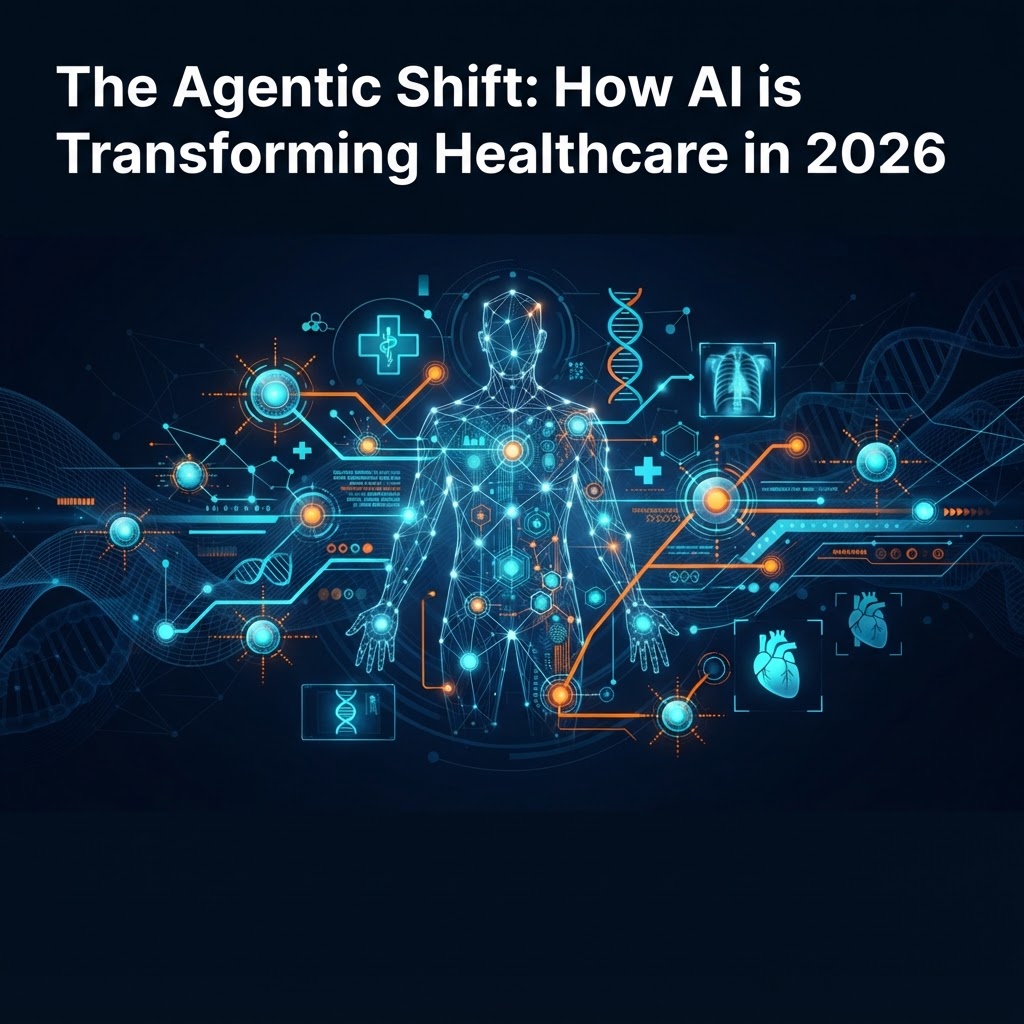
In the healthcare sector, the focus has shifted toward 'meaningful use' and explainable AI. Rather than replacing human expertise, AI is increasingly being adopted as a 'co-pilot' for clinicians. Major partnerships, such as Cigna’s collaboration with OpenAI, demonstrate how AI is being used to coordinate care for patients with complex conditions, helping them navigate resources more effectively.
Key developments in healthcare AI include:
- Drug Discovery: Pharmaceutical leaders like Bristol Myers Squibb are leveraging AI to accelerate the design of molecules and optimize clinical trial structures Source: Forbes.
- Administrative Relief: Generative AI is being deployed to automate back-office tasks, such as claims processing and insurance verification, which helps reduce clinician burnout Source: TechTarget.
- Autonomous Care: Advanced research is even exploring autonomous AI agents capable of adjusting cardiac care plans, marking a significant step toward real-time, data-driven patient management Source: TechTarget.
The Path Forward
For business leaders, the message is clear: the future belongs to those who can integrate these autonomous agents into their existing workflows. Whether it is through Microsoft’s industrial AI innovations or specialized healthcare platforms, the goal remains the same—unifying data to create a more responsive, efficient, and human-centric operation.
As we look toward 2026, the integration of digital twins, edge computing, and agentic AI will continue to define the competitive edge. Organizations that prioritize explainable, ethical, and scalable AI solutions will be best positioned to lead their respective industries.
Conclusion
The transition to agentic AI represents a fundamental change in how we approach industrial and clinical challenges. By embracing these autonomous systems, leaders can move beyond simple data analysis and into a realm of proactive, intelligent decision-making that drives both growth and better outcomes.
Found this article helpful? Share it with your network:
Explore Your Certification Pathway
Book a consultation with a certification advisor to confirm the right pathway for your role, goals and Early-Bird eligibility.