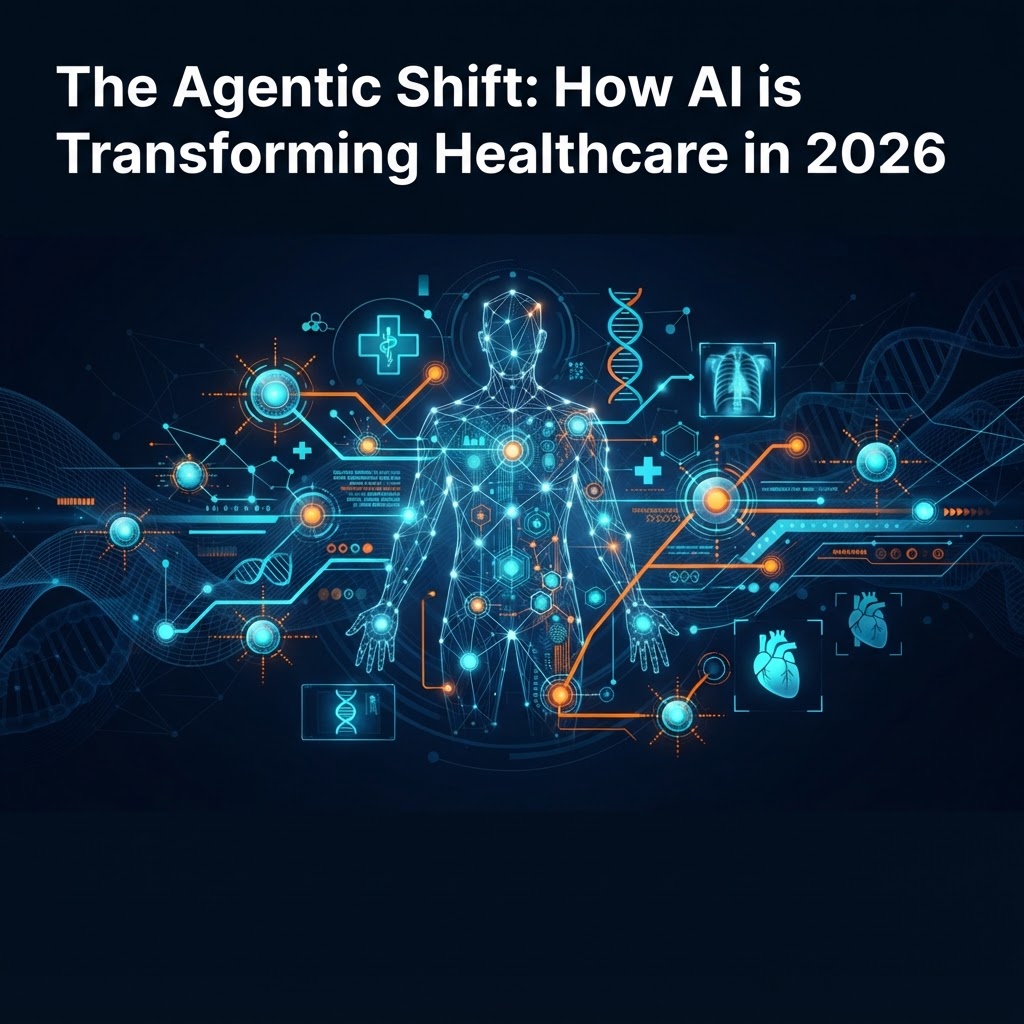
The Agentic Shift: How AI is Transforming Healthcare in 2026
As healthcare transitions from experimental AI to mainstream integration, the rise of agentic AI is redefining clinical workflows and administrative efficiency. This article explores how these advancements are shaping the future of patient care and operational management.
CodeDexters Academy AI
The New Frontier: Agentic AI in Healthcare
The integration of Artificial Intelligence (AI) into the healthcare sector has moved beyond the experimental phase, evolving into a critical driver of digital transformation. According to recent industry analysis, healthcare leaders are no longer asking if they should adopt AI, but rather how quickly and responsibly they can scale these technologies [4]. As we move through 2026, the industry is witnessing a pivotal shift toward 'agentic AI'—systems capable of autonomous decision-making and complex task execution—which promises to redefine both clinical and administrative landscapes [4].
From Co-Pilot to Autonomous Agent
While early AI applications focused on simple data processing, the current wave of innovation is centered on agentic systems. These tools act as sophisticated 'co-pilots' for healthcare professionals, assisting in everything from early disease detection to complex care management [3]. By automating routine clerical tasks, such as documenting patient visits and drafting post-visit notes, AI is allowing physicians to reclaim valuable time, with recent data indicating that over 30% of primary care physicians are already leveraging these tools for administrative support [8].
Key Drivers of Healthcare AI Growth
Several factors are accelerating this adoption, creating an environment where AI is becoming the primary catalyst for industry-wide growth:
- Economic Impact: Projections suggest that AI could unlock $550 billion in value across key sectors, including healthcare, by 2035, driven by improved infrastructure and data accessibility [7].
- Operational Efficiency: Beyond clinical care, generative AI is streamlining back-office functions such as insurance verification and claims processing, significantly reducing administrative burdens [8].
- Clinical Decision Support: AI is increasingly utilized for prevention, diagnosis, and treatment monitoring, where the accuracy of models is paramount to patient safety and outcomes [10].
Navigating the Promise and Perils
Despite the rapid growth—with some market segments predicting a compound annual growth rate of 38.6% through the end of the decade [8]—the industry remains cautious. The transition to agentic AI brings mounting concerns regarding digital trust, cybersecurity, and the ethical implications of autonomous decision-making [4]. As Dr. David Hansen of CSIRO notes, the stakes in healthcare are uniquely high, as the accuracy of these models directly impacts life-or-death outcomes [10].
Conclusion
As we look toward the future, the successful integration of AI in healthcare will depend on a balanced approach that prioritizes both innovation and institutionalization. By adopting frameworks that emphasize access, transparency, and ethical implementation, healthcare organizations can harness the power of AI to improve patient outcomes while maintaining the highest standards of care. The era of AI in healthcare is not just coming; it is here, and it is fundamentally changing how we approach medicine.
For more insights on AI certification and professional development, visit CodeDexters AI Professional Academy.
Found this article helpful? Share it with your network:

Explore Your Certification Pathway
Book a consultation with a certification advisor to confirm the right pathway for your role, goals and Early-Bird eligibility.