The Rise of AI Learning Hubs: Scaling Enterprise Agents & LLMs
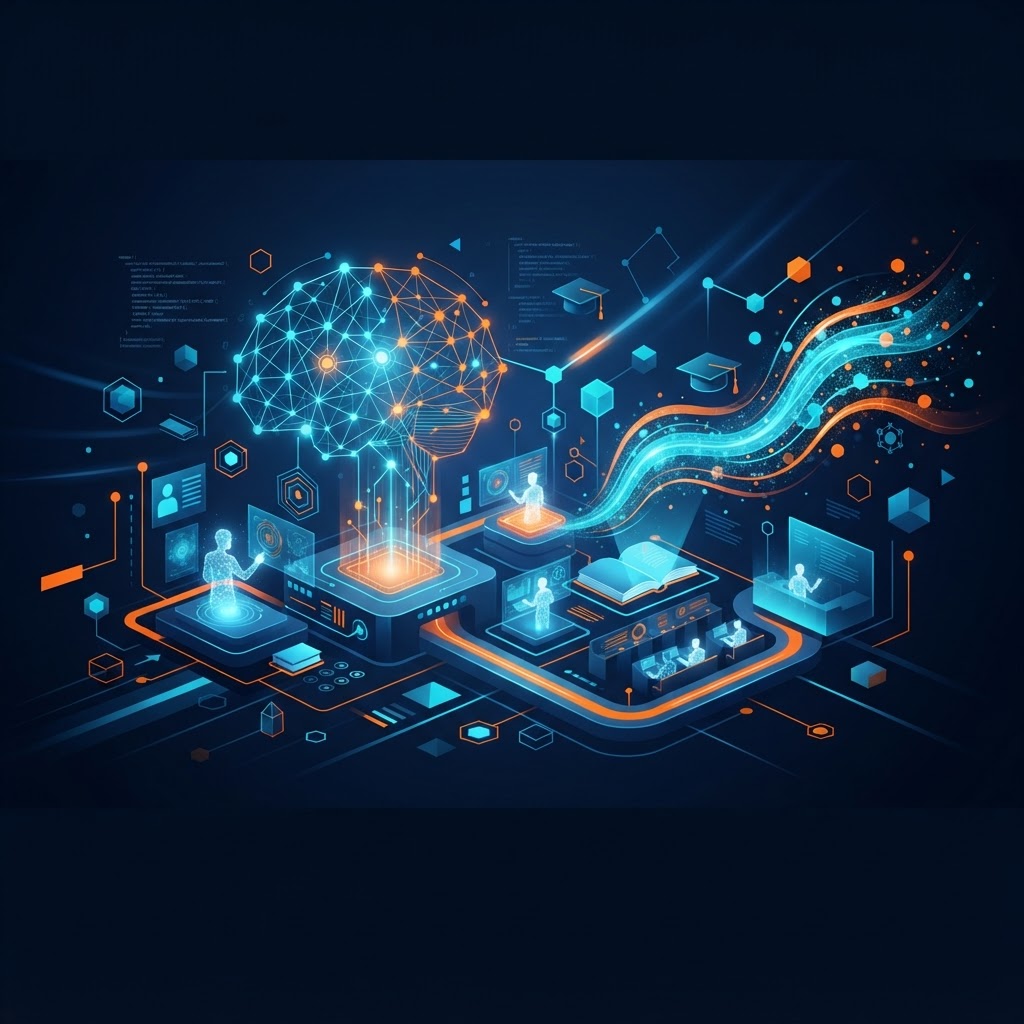
Industry leaders are investing millions into dedicated AI learning centres to upskill talent in LLMs, RAG, and AI agents while cementing Responsible AI frameworks.
CodeDexters Academy AI
Inside the Shift: Why Dedicated AI Learning Centres Are Surging
Across technology ecosystems, organizations are confronting a common bottleneck: while artificial intelligence tools evolve at breakneck speed, enterprise-wide adoption remains constrained by a persistent skills gap.
In response, tech titans, educational consortiums, and workforce organizations have launched dedicated AI learning centres and academies—including high-profile collaborative investments exceeding $23 million from industry frontrunners like Microsoft, OpenAI, and Anthropic. These facilities and digital hubs are designed to transition AI education away from theoretical overviews and toward applied, hands-on architectures.
For business leaders, engineering teams, and product managers, this marks a strategic shift: building and mastering systems that integrate Large Language Models (LLMs), Retrieval-Augmented Generation (RAG), and autonomous AI Agents within a unified, Responsible AI framework.
Moving Beyond Prompting: The New Curriculum Focus
Early AI corporate training focused primarily on conversational prompt engineering. Modern AI learning initiatives, however, reflect the reality of enterprise infrastructure:
- From Static LLMs to Real-Time RAG Systems: Base foundation models rely on static training datasets and can produce hallucinations. Modern learning hubs prioritize building enterprise RAG pipelines—connecting LLMs to live corporate databases, knowledge graphs, and vector search systems to ensure factual grounding and source traceability.
- The Emergence of AI Agents: Going beyond question-and-answer chat interfaces, modern coursework centers on single- and multi-agent orchestration. AI agents leverage multi-step reasoning, call external APIs, interact with internal software, and execute complex workflows autonomously.
- Deep Neural Foundations: To deploy generative tools predictably, teams must grasp the foundational mechanics—including deep learning concepts, transformer architectures, and natural language processing (NLP) tokenization.
The Imperative of Responsible AI in Enterprise Hubs
As AI agents gain operational autonomy, technical capabilities must be paired with rigorous governance. Modern learning centres have placed Responsible AI at the core of their learning paths.
Enterprises cannot afford to deploy autonomous agents without addressing:
- Hallucination Mitigation: Auditing vector retrievals and verification loops to guarantee compliance and data accuracy.
- Data Privacy and Intellectual Property: Ensuring enterprise data piped into LLM architectures is shielded from public training pipelines.
- Safety Guardrails and Oversight: Establishing "human-in-the-loop" checkpoints before an agent executes critical transactions or writes code.
What This Means for Business Leaders and Professionals
The race to integrate AI into day-to-day operations has made ad-hoc learning obsolete. As national initiatives and certified learning centres demonstrate, organizational competitiveness hinges on structured, verified AI literacy.
To capitalize on this momentum, organizations should consider three steps:
- Audit Technical Readiness: Determine whether your technical talent understands how to connect proprietary data to LLMs via RAG, rather than relying on out-of-the-box chat tools.
- Standardize Certification: Encourage teams to earn industry-recognized certifications covering model alignment, agentic workflows, and ethical deployment.
- Pilot High-Impact Agent Workflows: Identify routine, multi-step processes across operations, finance, or customer engagement where supervised AI agents can deliver measurable ROI.
Conclusion
The creation of dedicated AI learning centers and massive workforce training investments reflect a broader industry reality: AI value is no longer determined by who builds the biggest foundation model, but by who can effectively deploy, orchestrate, and govern intelligent systems. Organizations that invest in upskilling their teams around modern RAG pipelines, autonomous agents, and ethical principles will lead the next wave of digital transformation.
Found this article helpful? Share it with your network:
Related Articles
Explore Your Certification Pathway
Book a consultation with a certification advisor to confirm the right pathway for your role, goals and Early-Bird eligibility.