
AI Skills Employers Want: The 56% Salary Premium Shift
AI competencies now command up to a 56% wage premium as employers shift hiring toward agentic workflows and prompt engineering. Discover the top AI skills employers want and actionable resume strategies to accelerate your career transition.
CodeDexters Academy AI
The Rapid Evolution of AI Careers and Hiring
The professional landscape is undergoing an unprecedented structural transition. Where artificial intelligence once stood as an experimental departmental perk, it has now transformed into a core operational standard across finance, operations, marketing, and software engineering. For modern professionals, the conversation has pivoted from whether AI will transform your field to whether you possess the verified skills to orchestrate it effectively.
According to PwC's Global AI Jobs Barometer, skills in AI-exposed roles are shifting 66% faster than in traditional professions, with organizations willing to pay an impressive wage premium of up to 56% for verified AI-fluent talent. Concurrently, analysis shared by Gloat's Future of Work analysis highlights that 39% of the global workforce faces substantial disruption and redeployment over the next two to five years. In short: mastering AI is no longer optional—it is the definitive career differentiator.
High-Demand AI Skills Employers Want Today
Organizations are no longer just hiring PhD researchers to invent foundational models; they are aggressively recruiting business practitioners who can implement, fine-tune, and oversee AI-assisted workflows.
1. Agentic Workflow Orchestration and Automation
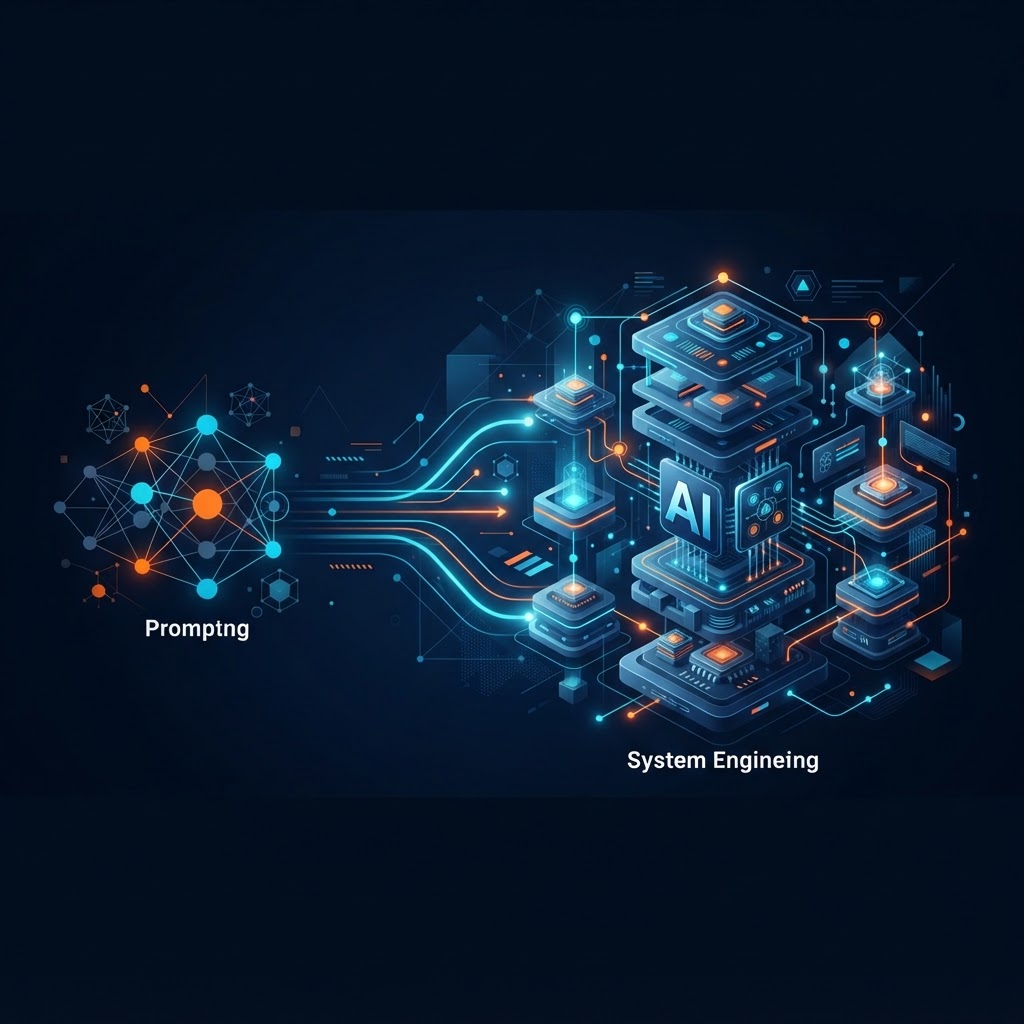
Companies are shifting from standalone generative prompts to automated multi-agent systems. Familiarity with workflow orchestration tools—such as integrating LLMs into operations pipelines using Zapier, Make, or Python—allows professionals to replace repetitive administrative processes with intelligent automations.
2. Applied Prompt Engineering and Evaluation
Contextual steering, chain-of-thought prompting, and model output validation have become indispensable. Employers need specialists who can serve as "human-in-the-loop" validators to minimize hallucinations, ensure ethical standards, and improve output accuracy for customer-facing and financial operations.
3. AI-Assisted Data Analysis
Data literacy is expanding beyond traditional spreadsheets. The modern workforce is expected to leverage conversational data queries and AI-driven platforms such as Power BI Copilot or Tableau AI to generate real-time predictive insights and business intelligence without relying solely on backend developers.
4. Domain-Specific Generative Application
From AI-powered lead scoring in enterprise sales to predictive personalization in marketing and automated candidate screening in HR, high performers are those who understand how off-the-shelf foundation models apply specifically to their vertical's KPIs.
Actionable Resume Tips: How to Showcase AI Competencies
Navigating ATS screeners and convincing hiring managers requires tangible proof over superficial buzzwords. Guidance from recent recruitment analyses, including SoundCV's AI resume framework, underscores the importance of outcome-based demonstrations.
- Quantify Efficiency and ROI: Avoid generic statements like "Experienced with ChatGPT." Instead, quantify your impact: "Engineered multi-agent prompt pipelines for campaign research, reducing content production turnaround by 45% while lifting organic engagement by 20%."
- Highlight Industry-Standard Tools: Specify the software and architectures you use, such as GitHub Copilot, Midjourney, Claude, Cursor, or enterprise LLM evaluation suites.
- Feature Accredited Certifications: Formal credentials signal structured training, proactive upskilling, and a commitment to data ethics and safety.
Emerging Future Jobs and Career Paths
The emergence of intelligent enterprise systems has carved out entirely new job classifications. Industry roadmaps, such as those published by the United States Artificial Intelligence Institute (USAII), point to soaring demand for specialized transition roles:
- Agent Product Managers: Leaders tasked with managing the lifecycle, performance criteria, and business logic of autonomous AI agents.
- AI Solutions Consultants: Intermediaries who diagnose corporate inefficiencies, vet third-party generative tooling, and guide seamless enterprise rollouts.
- Human-in-the-Loop Validators & AI Evaluators: Domain experts focused on quality control, policy compliance, bias mitigation, and safety testing for automated outputs.
Furthermore, long-term projections by the U.S. Bureau of Labor Statistics indicate that core technical positions—such as data scientists—will experience rapid job growth of 33.5% through 2034, solidifying the lasting momentum of the AI talent market.
Future-Proof Your AI Career with CodeDexters
Adapting to the AI revolution is about proactive positioning rather than reacting to automation. Whether your objective is career switching into AI consulting, stepping into emerging product roles, or commanding top-tier salary premiums in your current field, systematic training is your most reliable lever.
At CodeDexters AI Professional Academy, we equip forward-thinking professionals and business leaders with hands-on, credentialed skills in generative AI, prompt architecture, and enterprise implementation. Explore our certification programs today to take command of your AI-powered future.
Found this article helpful? Share it with your network:
Related Articles
Explore Your Certification Pathway
Book a consultation with a certification advisor to confirm the right pathway for your role, goals and Early-Bird eligibility.