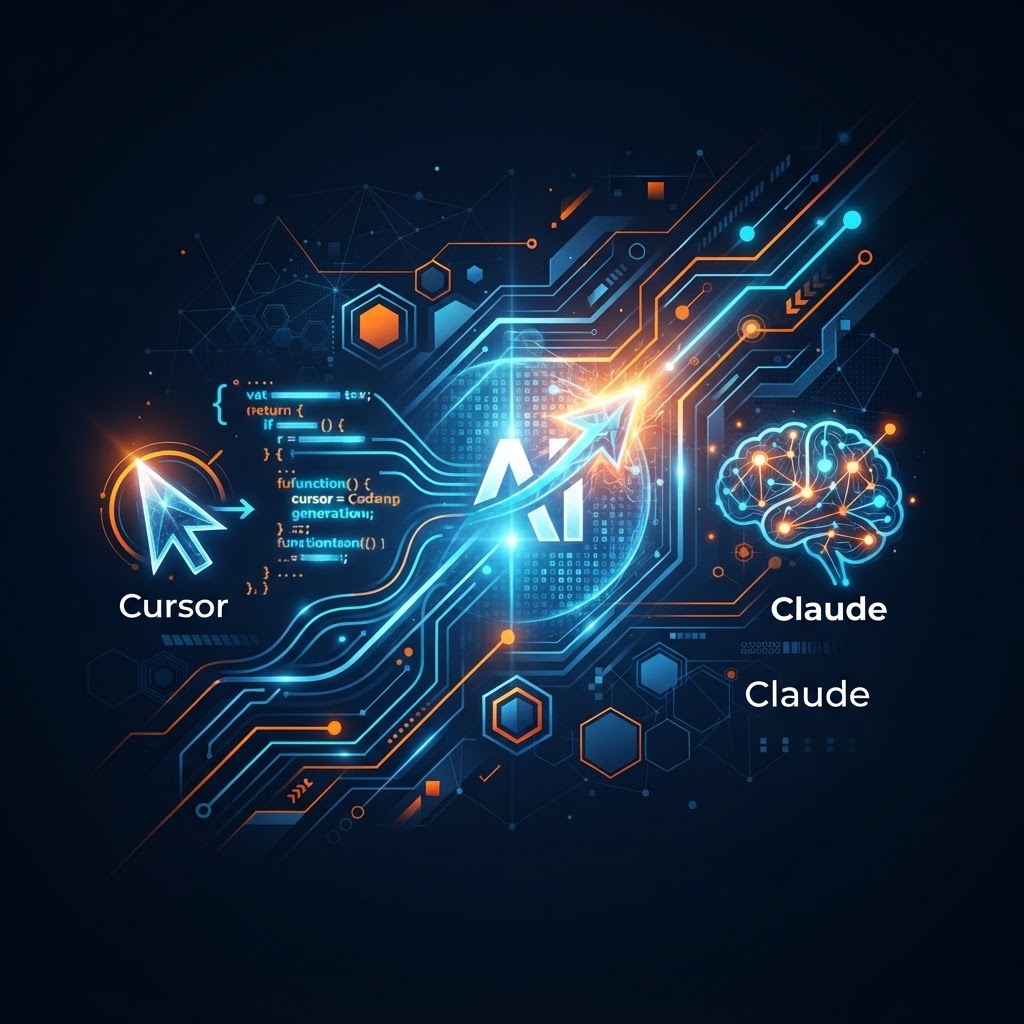
The AI Coding Revolution: Why Cursor and Claude Are Leading the Pack
The landscape of AI-powered development is shifting rapidly as specialized coding agents like Cursor and Claude redefine productivity. This article explores why these tools have become the industry standard for professional software engineering in 2026.
CodeDexters Academy AI
The New Era of AI-Assisted Development
In the fast-paced world of software engineering, the barrier between human intent and functional code has never been thinner. As of late 2026, the industry has moved beyond simple autocomplete tools. We are now in the era of the 'AI Coding Agent,' where platforms like Cursor and Claude are fundamentally changing how professional developers build, debug, and maintain complex systems.
Why Developers Are Choosing Specialized AI
While general-purpose models like ChatGPT remain powerful for brainstorming and creative writing, the professional development community has gravitated toward tools that offer deep integration into the codebase. Claude, in particular, has solidified its reputation for superior reasoning and instruction-following, making it the preferred engine for high-stakes engineering tasks.
Key advantages of the current AI coding ecosystem include:
- Context Awareness: Modern tools can now ingest massive codebases, allowing the AI to understand project-wide dependencies rather than just isolated snippets.
- Reduced Hallucinations: Unlike general search-based AI, developer-focused tools are increasingly optimized for accuracy, with Claude leading in its ability to flag uncertainty rather than providing incorrect code.
- Agentic Workflows: Platforms like Bolt and Cursor allow for full-stack application generation directly within the browser or IDE, drastically reducing the time from concept to deployment.
The Battle for the IDE
With Cursor reaching a $9B valuation, it is clear that the market views AI-native development environments as the future of software creation. These tools are not just plugins; they are integrated environments that treat the AI as a pair programmer. By leveraging models like Claude Sonnet 5, these editors provide a level of precision that was previously unattainable, helping developers manage extensive programming projects with ease Times Of AI.
Strategic Implications for Business Leaders
For organizations, the shift toward AI-assisted coding is a matter of competitive advantage. Companies that adopt these tools are seeing significant gains in developer velocity. However, the key is choosing the right stack. While Gemini remains a powerful engine for programmatic, high-volume tasks, the consensus among senior engineers is that Claude and Cursor currently hold the edge for complex, multi-file engineering tasks.
Conclusion
The AI tools of 2026 are no longer just assistants; they are integral members of the development team. As we look toward the future, the focus will continue to shift from 'generating code' to 'managing complex systems' through AI agents. For professionals at CodeDexters AI, staying ahead means mastering these agentic workflows and understanding which model best fits the specific requirements of your technical stack.
Stay tuned to CodeDexters AI for more deep dives into the evolving AI landscape.
Found this article helpful? Share it with your network:
Related Articles
Explore Your Certification Pathway
Book a consultation with a certification advisor to confirm the right pathway for your role, goals and Early-Bird eligibility.